
Amazon's Project Vesta — a top-secret home robot revealed in leaked 2019 documents — never officially launched. But its design principles, from hardware choices to security architecture, offer a practical blueprint for developers building their own secure, connected robots. Here's what engineers can learn from it.
The Core Hardware and OS Foundation
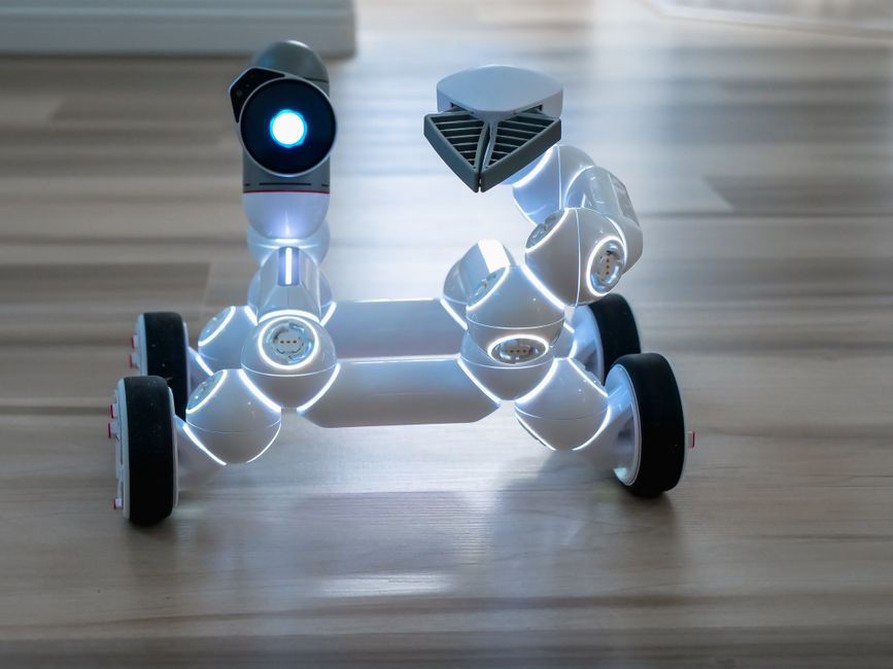
Project Vesta reportedly used a mix of off-the-shelf and custom components: a differential-drive base, an array of microphones and cameras, a depth-sensing LiDAR module, and a tablet-like display. The brain was an ARM-based SoC running a custom Linux distribution.
Choosing the right OS is critical for both performance and security. A stripped-down Linux kernel with minimal services reduces the attack surface. Beginners learning C++ for embedded systems can start by writing simple motor control daemons that communicate over I2C or SPI. When setting up a Linux environment for robot development, verify the integrity of your boot media. Our guide on How to Create a Verified Bootable Linux USB: A Security-Focused Guide walks through signing and checksum validation steps that prevent tampered images from infecting your robot's base OS.
Secure Communication Layers
Home robots must talk to cloud APIs and local devices. Leaked Vesta documents mention end-to-end encryption for video feeds and audio streams. For Java developers, implementing TLS 1.3 in the robot's control server is straightforward using the SSLSocket API, but you must validate certificates properly. A common mistake is to trust all certificates in a private network — that opens the door to man-in-the-middle attacks.
Network diagnostics become essential when debugging dropouts between the robot and its base station. Use tcpdump and Wireshark to inspect handshake patterns. If you encounter Chrome browser errors while testing the robot's web dashboard, Fixing Chrome's ERR_SPDY_PROTOCOL_ERROR: A Developer's Guide addresses root causes like expired certificates or misconfigured HTTP/2 settings that can also affect robot-to-browser connections.
Sensor Data Privacy and Local Processing
One of the biggest security wins in Vesta's design is the emphasis on on-device processing. Microphones should only listen after a physical mute button is pressed; camera feeds can be analyzed locally for obstacle avoidance without sending raw footage to the cloud. In C++, you can use OpenCV or TensorFlow Lite for edge inference. Always sandbox these processes using Linux seccomp profiles to restrict system calls.
Regularly audit the list of processes that have access to the camera device file (/dev/video0). A simple diagnostic command — lsof /dev/video0 — reveals unexpected readers. Documenting these checks in a security checklist helps maintain a clean baseline.
Firmware Updates and Supply Chain Integrity
Project Vesta's update mechanism reportedly used signed update packages verified by a hardware root of trust. For indie robot builders, a practical alternative is to use a read-only root filesystem with a separate update partition. The bootloader should verify kernel signatures before loading. Implementing this in U-Boot or GRUB requires careful configuration.
When you download third-party libraries for your robot's firmware — such as motor drivers or communication stacks — hash verification is non-negotiable. A compromised library could give an attacker control over the robot's movements. Set up a small CI pipeline that automatically checks SHA-256 hashes against official repositories.
Network Segmentation for Home Robots
Even if your robot is not connected to the internet, it probably communicates over Wi-Fi or Zigbee. Place the robot on a separate VLAN or a dedicated IoT subnet. This limits the blast radius if an attacker exploits a vulnerability in the robot's web server.
From a C++ standpoint, you can add a simple firewall rule check at startup: query iptables to ensure only specific ports (e.g., 443 for TLS, or a custom port for local control) are open. Reject all other inbound connections. Test this with a network scanner like nmap (run only on your own devices) to verify the configuration.

Secure Local Control Interfaces
Many home robots expose a REST API for mobile apps. Protect these endpoints with token-based authentication and rate limiting. In Java, use Spring Security's OAuth2 resource server; in C++, consider a lightweight framework like Pistache or Crow with JWT verification. Never hardcode API keys in the robot's firmware — store them in a tamper-resistant secure element or at least in an encrypted configuration file.
Digital Hygiene for Robot Operators
As a developer building a robot for others, you must document how end users should maintain it: change default passwords, keep the robot's firmware updated, and physically disable cameras when not needed. Your responsibility extends beyond code — it includes clear user education.
For your own test robot, practice data minimization. Delete logs that contain personal audio snippets after debugging. Use short-lived certificates for robot-to-cloud communication. These habits form the foundation of a security-minded development workflow.
If you're building a home robot today, start with a Raspberry Pi and a motor driver. Flash a verified Linux image, set up a separate VLAN, and test your encryption with Wireshark. That's the practical starting point — no secret project required.