
Check the light where the leaves will actually sit. An aloe might get several hours of sun on a living room windowsill and barely enough daylight to grow on a bookcase across the room. Before you buy a plant, check its intended spot in the morning and again in the afternoon. See whether direct sun reaches it, how long it lasts, and how much daylight curtains or nearby buildings block.
Check the growing conditions before you shop
- Direct sun: Sunlight falls right on the leaves. A sill that gets several hours of sun can suit an aloe or a jade plant. Ease a new plant into strong sun gradually so the leaves don’t scorch.
- Bright indirect light: The spot gets plenty of daylight without a strong beam hitting the leaves for much of the day. A prayer plant or moth orchid can do well near a large window with a sheer curtain.
- Low light: There’s some daylight, but not much. Cast-iron plants and ZZ plants tolerate dimmer spots than most houseplants, though they’ll grow more slowly. If there’s no window, use a grow light or pick another spot.
Leave the blinds and curtains as you normally keep them when you check the light. Look again when the seasons change: a tree that shades a window in summer may let direct sun through once its leaves fall.
Watch for cold window glass, heating vents, and doors that open often. Even with enough light, a plant can struggle in a cold draft or in the path of hot air.
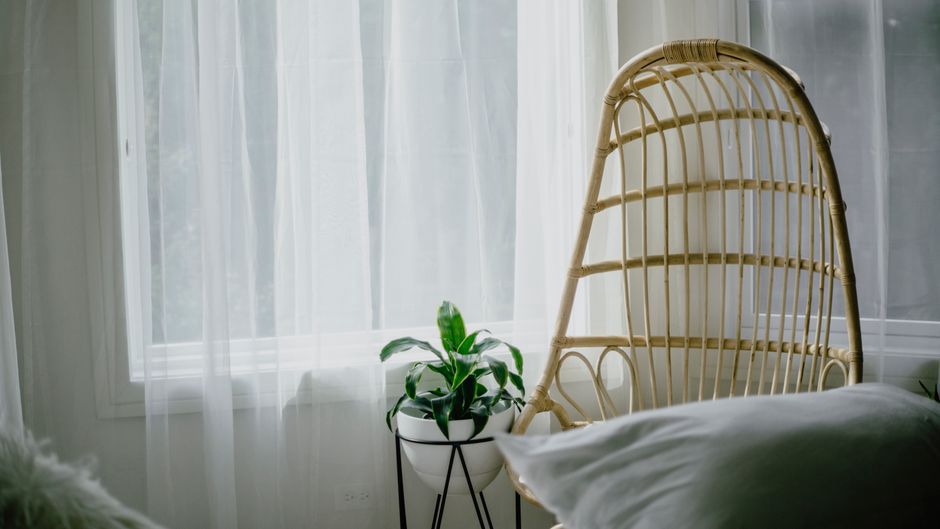
Living room: Match plant size to the light
A parlor palm can fill a spot beside a bright window without strong midday sun. A spider plant works on a shelf or in a hanging basket where its arching leaves have room to spread. If the only space available is a dim corner that still gets some daylight, try a cast-iron plant instead of a sun-loving succulent.
Measure for the plant’s mature spread, not just the pot. The pot may fit beside the sofa now, but the leaves could eventually stick out into the walkway. Make sure you can also reach the soil and empty the saucer without moving furniture or spilling water.
Bedroom: Work with your window-covering habits
A parlor palm can do well in a bedroom with gentle daylight. If the room is dimmer, try a cast-iron plant, provided you open the blinds for part of the day. Moving a plant closer to the window won’t help if it’s still on the dark side of a blackout curtain. Give it a spot where daylight reaches the leaves, or put a grow light on a timer during waking hours.
Keep pots away from radiators and air-conditioning outlets. A pot on a bedside table may dry out much more slowly than one on a bright sill, so check the potting mix before watering rather than putting both plants on the same schedule.
Kitchen: Reserve the sunniest space for herbs
Grow herbs you’ll cook with, but make sure you have the light they need. Basil likes warmth and strong light, so give it a sunny window or a grow light instead of a dim shelf by the sink. Mint generally gets by with less sun than basil, but it still needs a bright spot. Keep them in separate pots so you can water each one as its mix dries.
If the brightest stretch of counter is next to the stove, look for a spot nearby that’s out of the way of heat and grease. In bright indirect light, a spider plant is a better bet than herbs that would stretch toward the window without producing much you can use.
Bathroom: Check for daylight before counting on humidity
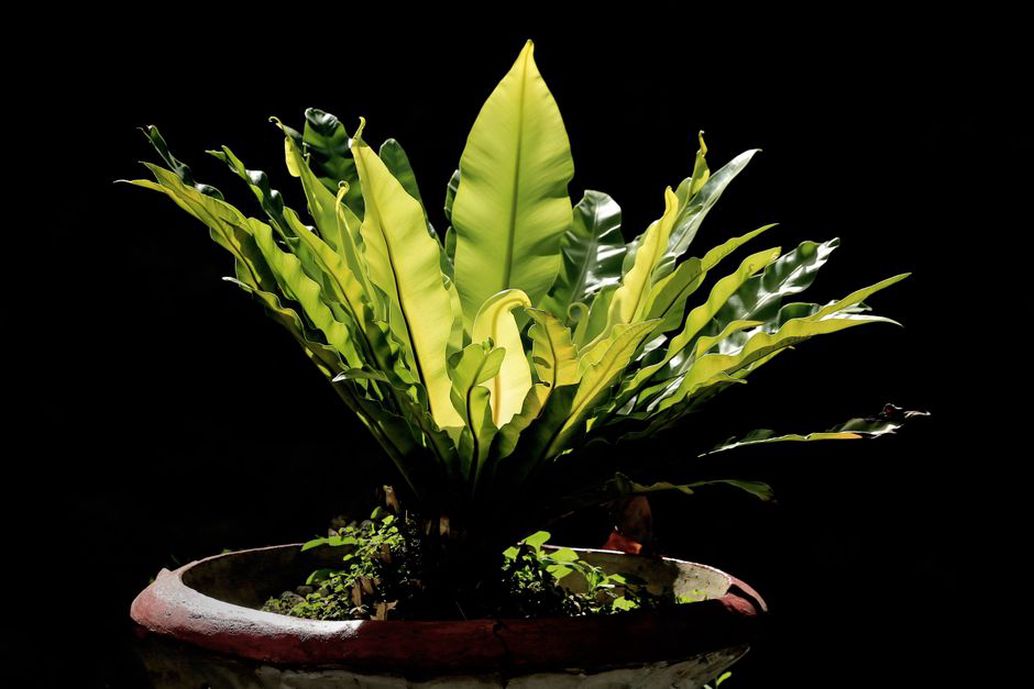
A bright, frosted window can give a bird’s nest fern the light it needs. A moth orchid can also do well in filtered light if it’s bright enough. Give the orchid an airy orchid mix and a pot that drains freely, and keep both plants out of the shower spray. Humidity can slow water loss from the leaves, but it won’t make up for a lack of light. A steamy shower doesn’t mean the room stays humid all day, either.
In a windowless bathroom, use a grow light only if you have a dry place for it and the fixture is suitable for the conditions. Otherwise, keep live plants in another room. If the bathroom stays damp for long stretches, check the potting mix before watering rather than assuming it’s dry because a week has passed.
Home office and hallway: Account for how the space is used
A compact peperomia can share a desk near a bright window without crowding the keyboard. Set it somewhere you won’t knock it over when you reach for a cable, and move it away from electronics to water it and let it drain. If daylight is limited, a dedicated grow light is a better bet than an ordinary desk lamp, which may not give the plant enough light.
In a hallway, check the exact shelf or floor spot with nearby doors in their usual positions. A ZZ plant can make do with some daylight for part of the day, but a ceiling light that comes on only when someone passes isn’t enough. If the plant is near an outside door, keep it out of cold drafts.
Check the label and container before buying
Look up the botanical name on the label to check the plant’s mature size, care needs, and toxicity. Common names can be misleading: a parlor palm is considered non-toxic to cats and dogs, while a sago palm is highly toxic. Avoid aloe, jade, and ZZ plants where pets are likely to chew on them. Even if the plant is non-toxic, keep potting mix and fertilizer away from pets and young children.
Pick a pot with drainage holes. If you like a decorative pot without holes, use it as an outer pot and leave the plant in its draining nursery pot. Lift the nursery pot out to water, let it stop dripping before you put it back, and check that no water has collected in the outer pot. Check the mix before you water again: on a shaded bathroom shelf, it may stay moist several days longer than on a sunny kitchen sill.