
Putting “clean the house” on Saturday’s calendar leaves one day to absorb every neglected job. By the time Saturday arrives, choosing where to start can take longer than wiping the kitchen counter. A weekly routine works better when it names the jobs, gives them realistic time slots, and allows for weeks that go sideways.
Start with what actually gets dirty
Walk through your home and note what needs attention after an ordinary week. Start with the surfaces you use most: kitchen counters, sinks, toilets, busy floors, and places where rubbish collects. A spare room may need only occasional dusting, while an entryway used by children or pets may need attention several times a week.
Keep daily upkeep separate from deeper cleaning. Washing dishes and putting food away are not jobs to save for a weekly session. Scrubbing the oven or washing windows usually belongs on a less frequent list. Put everything on the weekly list, and it will look unfinished even when the important work is done.
During the first week, note how long jobs actually take. “Bathroom: ten minutes” may leave out clearing the sink, replacing towels, and putting supplies away. The timings need not be exact; they just need to show whether your plan fits the time you have.

Build a small weekly baseline
Your baseline is the work that keeps the home comfortable and usable when time is tight. Make it short enough to finish during a busy week. For many households, it includes:
- Taking out rubbish and recycling before bins overflow
- Cleaning the toilet, bathroom sink, and kitchen sink
- Wiping frequently used counters and tables
- Vacuuming or sweeping the busiest floor areas
- Washing or changing towels and bedding as needed
Use that list as a starting point, not a standard every home must meet. Allergies, a shedding pet, or a shared bathroom may call for more frequent cleaning. Ask what happens if you skip a task: does it create a hygiene problem or make next week noticeably harder? If neither, it may belong on a monthly list.
Write each job as an action you can see yourself finishing. “Bathroom” leaves you deciding what it means when it is time to start. “Clean toilet and sink; wipe mirror” gives you a stopping point and makes it easier for someone else to take over.
Put tasks where they fit in the week
Put fixed commitments on the calendar first, then fit cleaning around them. Leave some evenings free. One longer session and a few short ones may be easier to keep than an ambitious daily schedule, depending on your hours, energy, and who shares the space.
Choose an anchor for each job
Attach a job to something that already happens regularly: breakfast on Monday, putting out the bins, or running a load of laundry. “Wipe the bathroom sink after brushing teeth on Thursday” is easier to act on than “clean the bathroom sometime this week.” Pick moments you can usually count on, not ones that often run late.
A modest schedule could look like this:
- Monday: Start a towel wash and wipe the bathroom sink and mirror.
- Wednesday: Clean the toilet and take out bathroom rubbish.
- Friday: Clear and wipe kitchen counters; check the fridge for food that needs using or discarding.
- Saturday: Vacuum busy rooms and change bedding.
Those days are examples, not rules. The point is to give each job a clear endpoint. If Saturdays are usually full, move the floors to a quieter weekday instead of counting on a burst of weekend motivation.
Leave a buffer
Schedule less than the total time you think you have. Laundry may need another cycle, and wiping the kitchen can reveal a spill that needs attention. A buffer also gives missed jobs somewhere to go. If one slips, move it to the next available slot rather than doubling every session to catch up.
Make starting and finishing easier
Keep basic supplies near where you use them, stored safely away from children and pets. A bathroom cloth, appropriate cleaner, and toilet brush are more useful in the bathroom than at the back of a crowded cupboard. Read product labels, ventilate as directed, and never mix cleaning chemicals. Check that a cleaner suits the surface, too; what works on a sink may damage a countertop.
Clear the surface before you try to clean it. If a counter is covered with mail and dishes, wiping cannot be the first step. Give items that keep piling up a place to go, even if it is a temporary tray you sort once a week. Otherwise, a short cleaning job turns into an unplanned organizing session.
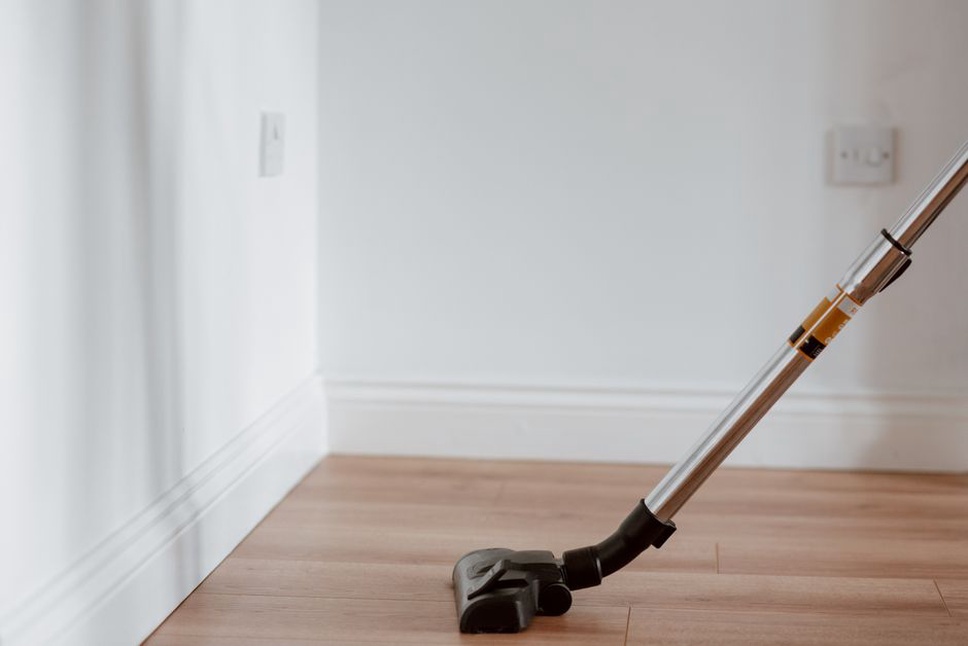
Decide what “done” means before you begin. For the floors, that might mean moving small items, vacuuming open areas, and putting the vacuum away—not rearranging furniture. A boundary keeps one job from swallowing the time set aside for others.
Share the work without creating a second job
In a shared home, give people ownership of jobs instead of leaving one person to manage the list and remind everyone. Ownership means noticing when the job needs doing, finding the supplies, and finishing it. Agree on what counts: does “clean the kitchen” include the sink, stovetop, and rubbish? A list on the fridge or a shared calendar can make the answer visible without constant check-ins.
Split the work by available time and ability, not just by who notices dirt first. Someone with limited mobility may prefer a seated task; a housemate who works weekends may take a weekday job. Revisit the split when schedules change. If everyone assumes somebody else is taking out the bins, the rest of the plan will not fix it.
Adjust the routine after two weeks
One disrupted day tells you little. Try the plan for two ordinary weeks, marking what gets done and noting why a job is repeatedly missed: no time, missing supplies, an awkward day, or a longer job than expected. Then address that reason. Move the job, make it smaller, or attach it to a habit you already have.
Keep occasional jobs on a separate list. Fridge shelves, skirting boards, and windows can be scheduled when they need attention rather than appearing on every Saturday’s plan. During an unusually busy week, do the hygiene essentials and return to the usual schedule the next week. Optional jobs do not all need to be made up at once.
For the next two weeks, put just three appointments on your calendar: bathroom fixtures, busy floors, and laundry. Record the time each takes. If the floors consistently take 25 minutes rather than the 10 you allowed, give them a 30-minute slot or split the rooms across two days.